Why increasingly manipulated property photographs are creating a problem for buyers, and why getting the photography right in the first place matters.
You see a property advertised online. The photographs look impressive. The rooms appear spacious, the decor is immaculate, the garden looks beautifully maintained and the overall impression is that this could be exactly the home you have been looking for.
You arrange a viewing, perhaps travel some distance, and arrive to discover something rather different. The rooms are smaller than they appeared. The finishes are tired. The garden doesn’t look quite as inviting. Furniture, architectural details or even structural features seem to have changed between the photographs and the actual property.
Welcome to the growing phenomenon known as housefishing.
What exactly is housefishing?
Housefishing is the term increasingly being used to describe property marketing photographs that have been digitally manipulated to such an extent that they no longer provide a fair representation of the property being advertised.
Artificial intelligence has made this considerably easier. What once required real Photoshop skill can now be achieved in seconds using readily available AI tools. Walls can be repainted, rooms virtually furnished, gardens transformed, clutter removed and interiors made to look brighter, larger and more luxurious.
Some of these techniques have legitimate applications. Digitally furnishing an empty room, for example, can help someone understand how it might be used, provided the image is clearly identified as a visualisation rather than a photograph of the actual property.
The problem arises when the distinction between what exists and what has been digitally created becomes blurred, or disappears altogether. A photograph that removes an unsightly pile of personal belongings is one thing. An image that removes an architectural feature, disguises the condition of a room, changes the proportions of a space or creates a garden that doesn’t exist is quite another.
BBC News and The Guardian have both recently highlighted examples of prospective buyers who were attracted to properties by photographs that bore little resemblance to what they found when they visited. In one case the differences included room proportions, window sizes and architectural details.
It is hardly surprising that buyers are becoming sceptical. There is already a general pushback against AI-generated content because of its lack of authenticity: as soon as people sense that what they are looking at has been generated or heavily altered by AI, they instinctively trust it less. That is not the reaction you want to photographs of a property a buyer is interested in.
Why housefishing is a problem for everyone
Buying a property is one of the biggest financial decisions most people will ever make. Photographs are often the first opportunity a prospective buyer has to assess whether a property is worth investigating further. They are not simply decorative marketing material. They help people decide whether to arrange a viewing, take time off work, travel to a location and potentially commit a considerable amount of money.
When photographs create unrealistic expectations, everybody loses.
For buyers, there is the frustration of wasted time, unnecessary journeys and disappointment. More importantly, it becomes harder to trust the information presented in property listings at all.
For sellers, misleading images attract enquiries from people whose expectations cannot be met. That means unnecessary viewings and buyers who quickly lose interest when confronted with the reality.
For estate agents, there is a longer-term risk to credibility. An attractive photograph might generate an initial enquiry, but if the property fails to live up to its presentation, the agent’s reputation suffers.
Good property marketing should attract the right buyer for the right reasons, not persuade somebody to view a property on the basis of something that isn’t actually there.
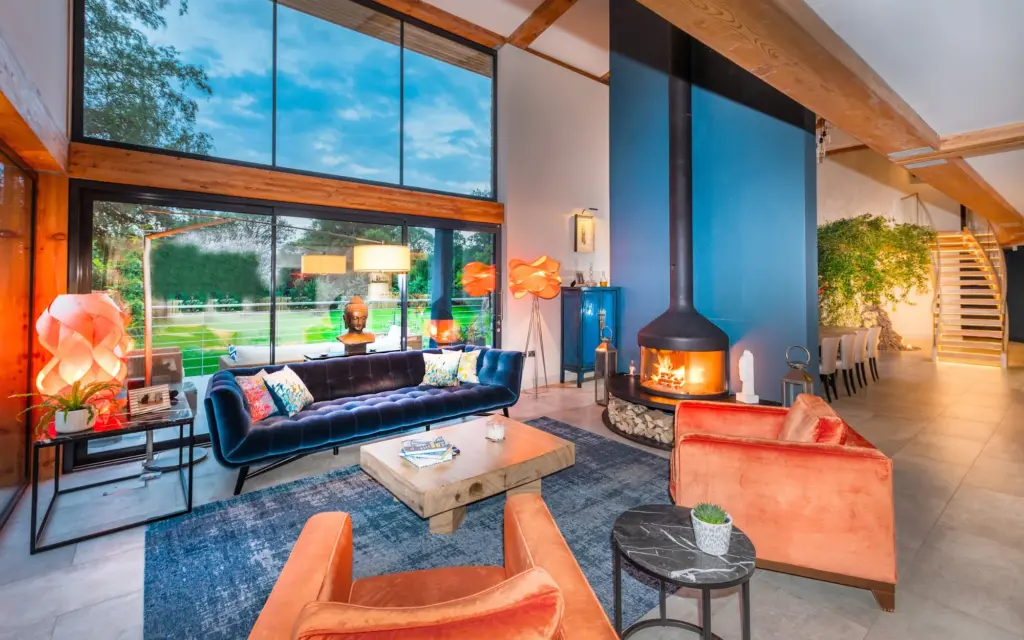
How to spot AI-manipulated property photos
It isn’t always easy to identify an AI-enhanced photograph, particularly as the technology becomes more sophisticated. However, there are a few things worth paying attention to when browsing property listings.
- Look carefully at the proportions of rooms. Does the furniture appear unusually small in relation to the room? Are beds, sofas and dining tables positioned in a way that suggests more space than you would reasonably expect? Be particularly cautious where a room looks exceptionally spacious despite containing substantial furniture.
- Check windows, doors and architectural details. Look at the shape and proportions of windows, fireplaces, chimney breasts, alcoves, ceiling heights and doorways, and compare them between photographs of the same room. Inconsistencies are a warning sign.
- Be wary of unusually perfect interiors. Immaculate surfaces, perfectly uniform lighting, freshly decorated walls and an absence of everyday signs of occupation aren’t necessarily evidence of manipulation. But if every room looks almost unrealistically pristine, ask whether the photographs have been digitally altered.
- Examine gardens and external areas. Look for changes in lawn condition, planting, boundaries, neighbouring buildings and the relationship between the property and its surroundings. A garden that appears far larger, more established or better maintained than the other photographs suggest deserves closer inspection.
- Look for inconsistencies between photographs. Compare the same room from different angles. Does a piece of furniture appear in one image but not another? Does a window, radiator or architectural feature disappear? Are the shadows, reflections and lighting consistent?
- Ask the agent. There is nothing unreasonable about asking whether photographs have been digitally enhanced, virtually staged or altered using AI. If a room has been virtually furnished, ask to see the original photograph. Don’t be afraid to ask for clarification before arranging a viewing.
There is a difference between good photography and digital fabrication
I have been a professional photographer for more than 35 years, and I believe there is a fundamental difference between using photographic skill to present a property at its best and using digital technology to create a different version of it.
Good property photography is about understanding how to photograph a space so that it looks its best. Believe me, that is not always easy, but I don’t believe AI is the right way to solve that particular problem.
Well-crafted photography is not created by simply pointing a camera at a space. It involves choosing the right camera position, lens, perspective and composition. It means understanding natural and artificial light, knowing when to photograph a room, preparing the property properly and making considered decisions about what to include in the frame.
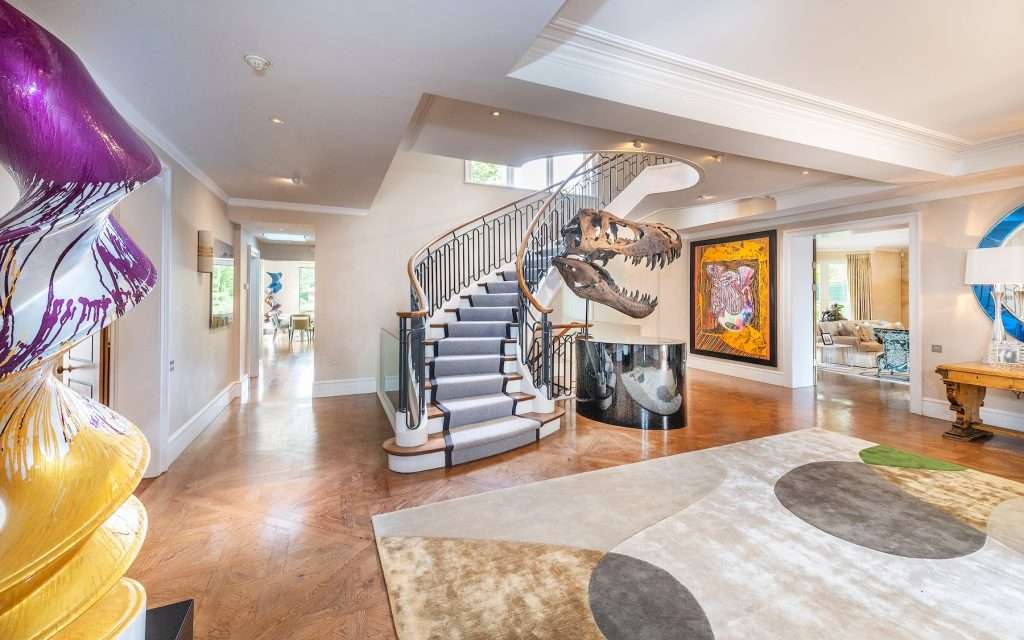
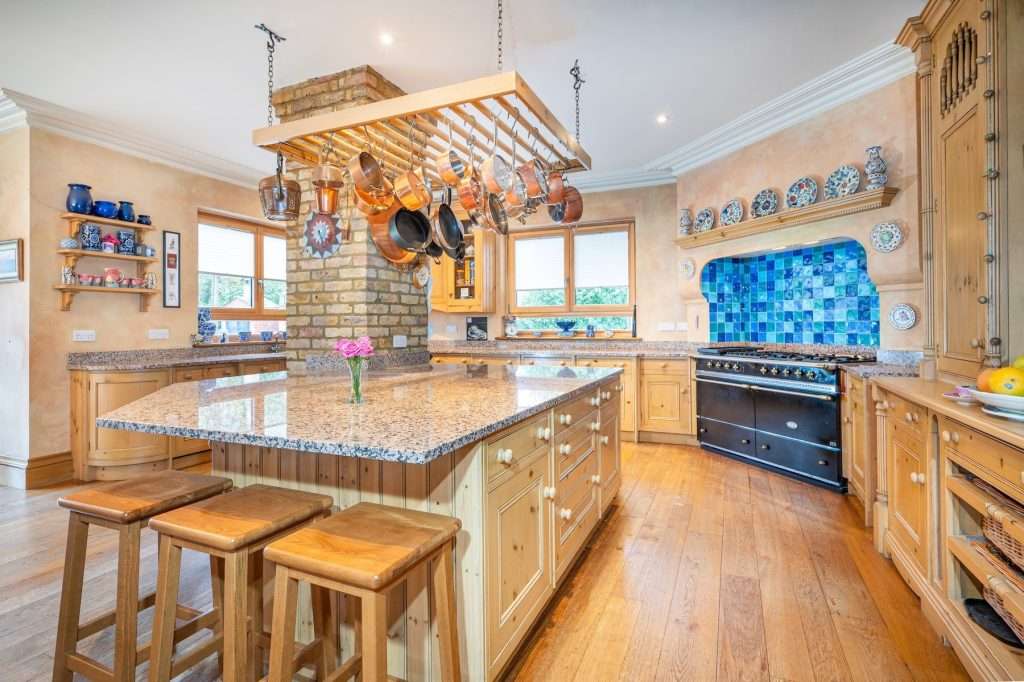
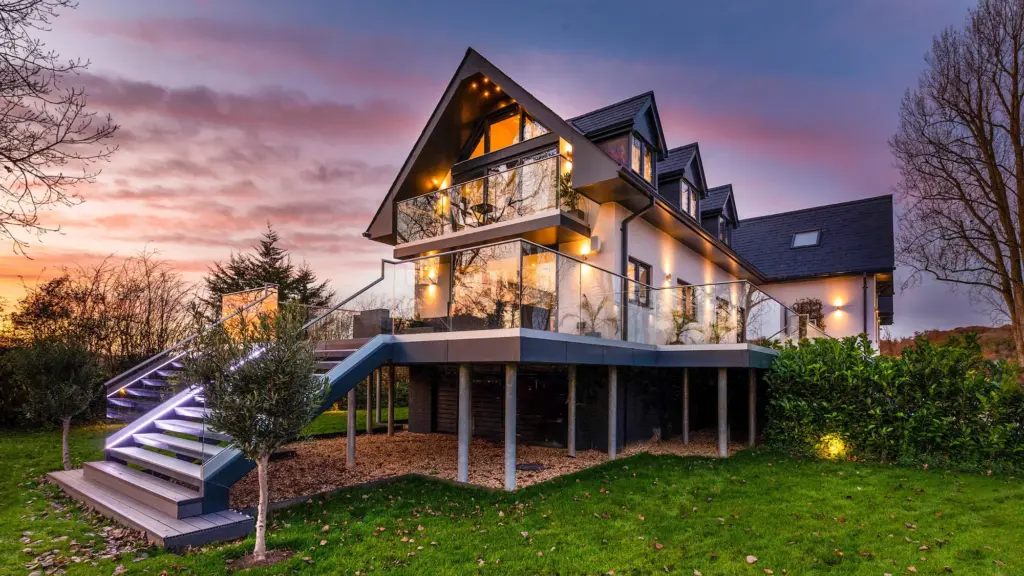
It also requires experience. A skilled photographer understands how to make a room look inviting without misrepresenting its proportions, how to show the relationship between adjoining spaces and how to capture the character of a property rather than simply produce a collection of attractive pictures. You can see that approach in my recent luxury property photography for Chestnut Property in Henley-on-Thames, and in how honest, professional photography revived a stalled listing near Windsor.
The objective should always be to show the property at its best, not to make it look like something it isn’t.
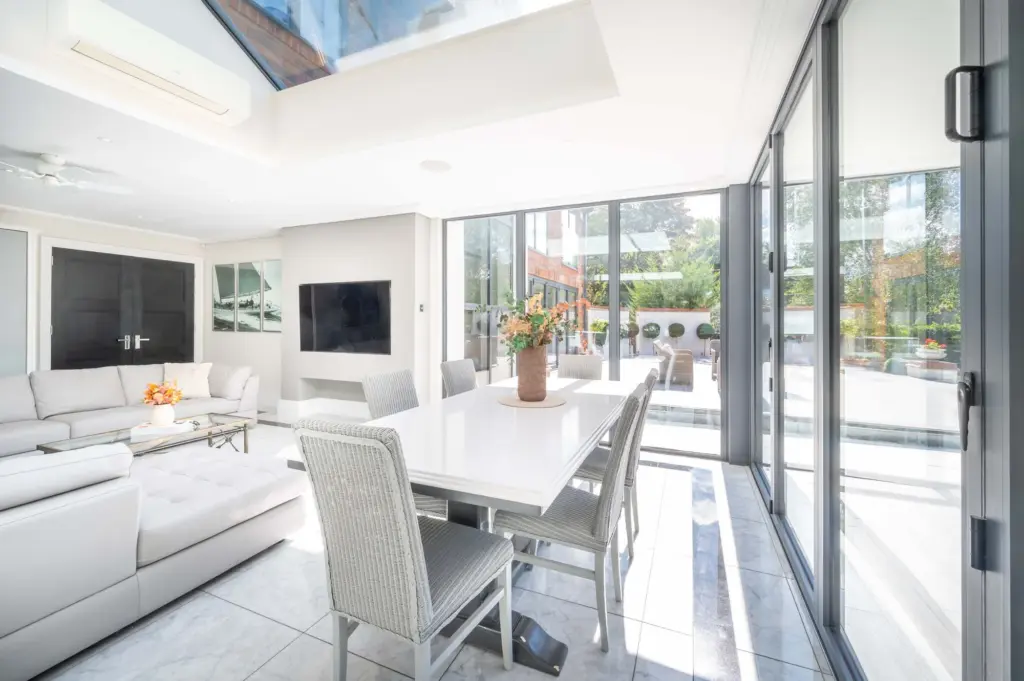
Do I use AI in my photography?
Yes, but selectively and with a clear purpose.
AI-assisted tools have become useful additions to professional post-production. I sometimes use them to remove small, unwanted distractions or tidy a scene where an item could not reasonably be moved at the time of the shoot: a temporary obstruction, a distracting object, an incidental item that detracts from an otherwise good photograph.
There is an important distinction, however, between tidying a photograph and changing the property itself.
I don’t use AI to invent architectural features, change the proportions of rooms, create imaginary views, disguise the condition of a property or transform an ordinary interior into something that exists only on a computer screen.
My approach is to get the photograph right at the point of capture. Post-production should refine and improve the photograph, not manufacture a different reality.
A photograph should help you fall in love with the right property
There is nothing wrong with wanting a property to look its best. Sellers want their homes presented attractively, and estate agents need compelling marketing material to stand out in an increasingly competitive market.
But there is a difference between showing a property beautifully and showing it inaccurately.
The best property photographs don’t need to invent anything. They communicate the character, quality, space and appeal of a property in a way that makes someone want to experience it for themselves. That takes more than an AI enhancement button. It takes photographic judgement, technical knowledge, experience and an understanding of how people see and respond to images.
My approach to property photography is straightforward: photograph the property that exists, present it at its best, and let the buyer discover its potential for themselves.
Looking for a property photographer in Reading, Henley-on-Thames or across the Thames Valley who shows homes as they really are? Whether you are an estate agent, a developer or a homeowner preparing to sell, I’d love to hear about your property.
👉 View my commercial photography portfolio 👉 See my commercial photography services 👉 Get in touch